


Mencap states that a learning disability is ‘a reduced intellectual ability and difficulty with everyday activities, which affects someone for their whole life.’
Individuals with a learning disability can have difficulty:
Autism is a developmental disorder that can vary in severity. It affects how an individual communicates with and relates to others, and how they experience the world around them.
Mae Mencap yn diffinio anabledd dysgu fel gallu deallusol is ac anhawster wrth gyflawni gweithgareddau cyffredin, sy'n effeithio ar unigolion gydol eu hoes.
Gall unigolion ag anabledd dysgu ei chael hi'n anodd gwneud y canlynol:
Mae awtistiaeth yn anhwylder datblygiadol a all amrywio o ran difrifoldeb. Mae'n effeithio ar y ffordd y mae unigolyn yn cyfathrebu ac yn uniaethu ag eraill, a sut y mae'n profi'r byd o'i amgylch.

There are 1.5 million people with a learning disability in the UK.
Between 31% and 35.4% of people with a learning disability are autistic. The more severe the autism, the more likely the individual is of having a learning disability.
At present, there are around 700,000 people on the autism spectrum in the UK – that's more than 1 in 100.
Mae gan 1.5 miliwn o bobl yn y DU anabledd dysgu, ac o'u plith mae tua 193,707 ohonynt yn blant oedran ysgol.
Mae rhwng 31% a 35.4% o bobl ag anabledd dysgu yn awtistig. Po fwyaf difrifol yw'r awtistiaeth, y mwyaf tebygol y bydd gan yr unigolyn anabledd dysgu.
Ar hyn o bryd, mae tua 700,000 o bobl ar y sbectrwm awtistiaeth yn y DU – mwy nag un o bob 100.
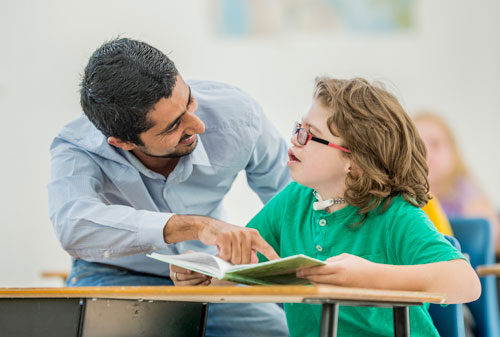
There are some conditions that mean you are likely to have a learning disability but will also have other physical or emotional effects. A lot of people have more than one diagnosis and have a set of conditions that are unique to them.
Down's syndrome, also called Down syndrome, is a genetic condition that usually causes some level of learning disability.
Down’s syndrome is caused by an additional chromosome. In every cell in the human body there is a nucleus, where genetic material is stored in genes. Genes relate to our inherited traits (i.e. hair colour and eye colour) and are grouped along rod-like structures called chromosomes. Typically, the nucleus of each cell contains 23 pairs of chromosomes, half of which are from the mother and half from the father. Down syndrome occurs when an individual has a full or partial extra copy of chromosome 21
Fragile X is a genetic condition that affects both boys and girls, although boys are often more severely affected.
Fragile X is the most common inherited cause of learning disability. Males with Fragile X usually have delayed development of speech and language and mild to moderate intellectual disability, with around a third of female Fragile X sufferers having an intellectual learning disability.
Fragile X has been identified as a mutation in the FMR1 gene which is responsible for the regulation and production of proteins and the development of the connection of nerve cells in our bodies.
Learning disability is often confused with learning difficulties such as dyslexia, ADHD or dyspraxia.
Some conditions such as autism and Asperger syndrome, which are not a learning disability, may also present with a co-occurring learning disability.
A learning disability is different from a learning difficulty as a learning difficulty does not affect general intellect.
Mae rhai cyflyrau yn golygu eich bod yn debygol o fod ag anabledd dysgu, ond byddwch hefyd yn cael eich effeithio yn gorfforol ac yn emosiynol. Mae gan lawer o bobl fwy nag un diagnosis ac mae ganddyn nhw set o gyflyrau sy’n unigryw iddyn nhw.
Cyflwr genetig yw syndrom Down, sydd hefyd yn cael ei adnabod fel syndrome Down’s, sydd fel arfer yn achosi rhyw lefel o anabledd dysgu.
Caiff syndrome Down ei achosi gan gromosom ychwanegol. Ymhob cell yn y corff dynol mae yna niwclews ble caiff deunydd genynnol eu storio yn y genynnau.
Mae genynnau yn ymwneud a’n nodweddion etifeddol (h.y lliw gwallt a lliw llygaid) ac maent wedi’u grwpio mewn adeileddau fel edau a elwir yn cromosomau.
Fel arfer, mae cnewyllyn pob cell yn cynnwys 23 pâr o gromosomau, hanner gan y tad a hanner gan y fam. Mae syndrom down yn digwydd pan fydd gan unigolyn gopi ychwanegol llawn neu rannol o gromosom 21.
Cyflwr genynnol yw Fragile X sy’n effeithio ar fechgyn a merched, er bod bechgyn yn aml yn cael eu heffeithio’n fwy difrifol. Fragile X yw achos etifeddol mwyaf cyffredin anabledd dysgu. Mae gwrywod sydd â Fragile X fel arfer â datblygiad lleferydd ac iaith hwyrach ac anabledd deallusol ysgafn i gymedrol, gyda thua thraean y menywod sydd a Fragile X gydag anabledd dysgu fel gallu deallusol.
Mae Fragile X yn cael ei adnabod fel mwtaniad yn y genyn FMR1 sy’n gyfrifol am reoleiddio a chynhyrchu proteinau a datblygu cysylltiad y celloedd nerfol yn ein cyrff.
Mae anabledd dysgu yn aml yn cael ei ddrysgu gydag anawsterau dysgu megis dyslecsia, ADHD neu ddyspracsia.
Mae rhai cyflyrau fel awtistiaeth a syndrom Asperger, nad ydyn yn anabledd dysgu, yn gallu ymddangos ar y cyd gydag anabledd dysgu.
Mae anabledd dysgu yn wahanol i anhawster dysgu gan nad yw anhawster dysgu yn effeithio deallusrwydd cyffredinol.

Individuals with autism usually have difficulties in the following areas:
This is known as the triad of impairments.
Putting those issues into context:
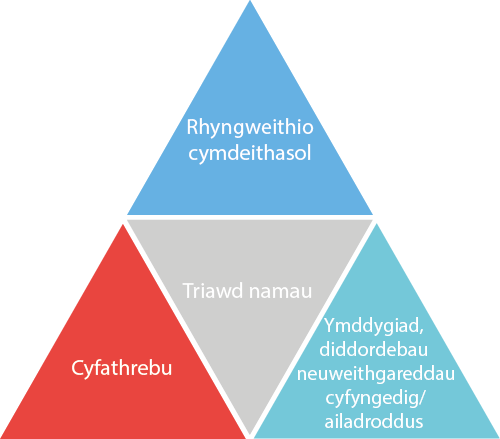
Fel arfer, mae unigolion ag awtistiaeth yn cael anawsterau yn y meysydd canlynol:
Cyfeirir at hyn fel y triawd namau
Rhoi'r materion hyn yn eu cyd-destun:
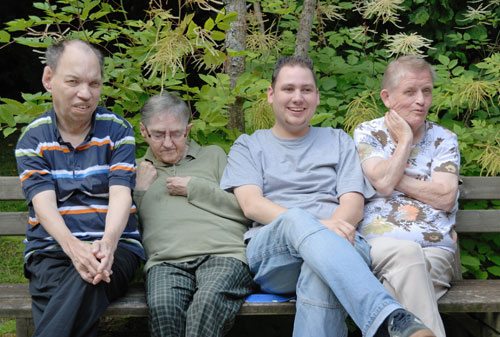
It is important to recognise that no two individuals are the same. They will each have their own strengths and talents as well as specific needs, and because of this, it is important that even if the needs are similar, they are all treated on an individual basis.
It is important that the individual is recognised and supported, rather than the condition. They should be involved in all planning of their care, along with family and friends. This care plan should take into consideration what is important to the individual now and puts that into action. Those involved in the individual’s care should also keep on listening so that they understand the hopes the individual has for the future and so that they can put in place the support they will need.
Mae'n bwysig nodi nad yw unrhyw ddau unigolyn yr un fath. Bydd gan bob un ei gryfderau a'i dalentau unigol yn ogystal ag anghenion penodol, ac o ganlyniad mae'n bwysig iddynt gael eu trin yn unigol, hyd yn oed os oes ganddynt anghenion tebyg.
Mae'n bwysig sicrhau mai'r unigolyn a gaiff ei gydnabod a'i gefnogi, yn hytrach na'r cyflwr. Dylid cynnwys yr unigolyn wrth gynllunio ei ofal, ynghyd â'i deulu a'i ffrindiau. Dylai'r cynllun gofal hwn ystyried beth sy'n bwysig i'r unigolyn nawr a gweithredu ar hynny, a dylid parhau i wrando hefyd er mwyn gallu deall dyheadau'r unigolyn ar gyfer y dyfodol a sicrhau bod y cymorth angenrheidiol ar gael iddo.
The medical models of disability look at what’s wrong with the individual and not what they need. It looks at curing or managing the illness and investing resources into the health care related services in order to do so.
The social models of a disability look at how society is organised. It looks at how society causes barriers, like access to buildings, disabled facilities and opportunities for employment etc.
Removing these barriers can give equal opportunities for those who are affected by a disability and allows them to be more independent and have more choice and control over their lives.
Mae'r modelau anabledd meddygol yn ystyried beth sy'n bod ar yr unigolyn yn hytrach na beth sydd ei angen arno. Maent yn ystyried gwella neu reoli'r salwch a buddsoddi adnoddau yn y gwasanaethau sy'n gysylltiedig â gofal iechyd er mwyn gwneud hynny.
Mae'r modelau anabledd cymdeithasol yn ystyried sut y caiff cymdeithas ei threfnu. Mae'n ystyried sut mae cymdeithas yn achosi rhwystrau, fel mynediad i adeilad, cyfleusterau i bobl anabl a chyfleoedd o ran swyddi ac ati.
Gall dymchwel y rhwystrau hyn roi cyfle cyfartal i'r rheini yr effeithir arnynt gan anabledd a rhoi cyfle iddynt fod yn fwy annibynnol ac arddel mwy o ddewis a rheolaeth dros eu bywydau.
Individuals with learning disabilities and autism have been disadvantaged and devalued over the years. Their rights, independence, choices and inclusion haven’t been considered when planning their care and support.
Today, however, the social care model addresses individuals as people with rights.
Individuals no longer have to endure long term stays in hospital to receive care and support, leading to them becoming institutionalised. They are now able to be part of society, living independently or in assisted accommodation with care and support services in place to ensure that their health needs are met along with all of their other needs.
The education community now no longer labels children with learning disabilities as slow, but rather puts in place support mechanisms to enable them to achieve along with their peers.
Mae unigolion ag anableddau dysgu ac awtistiaeth wedi bod o dan anfantais ac wedi cael eu dibrisio dros y blynyddoedd. Nid ystyriwyd eu hawliau, eu hannibyniaeth, eu dewisiadau na chynhwysiant wrth gynllunio eu gofal a'u cymorth.
Fodd bynnag, yn yr oes sydd ohoni, mae'r model gofal cymdeithasol yn ymdrin â'r unigolion fel pobl a chanddynt hawliau.
Nid yw unigolion yn gorfod dioddef cyfnodau hir yn yr ysbyty mwyach er mwyn cael gofal a chymorth, a oedd yn eu sefydliadu. Gallant bellach fod yn rhan o gymdeithas, gan fyw'n annibynnol neu mewn llety â chymorth, diolch i wasanaethau gofal a chymorth sy'n sicrhau y caiff eu hanghenion iechyd eu diwallu ynghyd â'u holl anghenion eraill.
Nid yw'r gymuned addysg bellach yn labelu plant ag anableddau dysgu fel plant araf, ond yn hytrach mae'n rhoi systemau cymorth ar waith er mwyn galluogi iddynt gyflawni ochr yn ochr â'u cyfoedion.
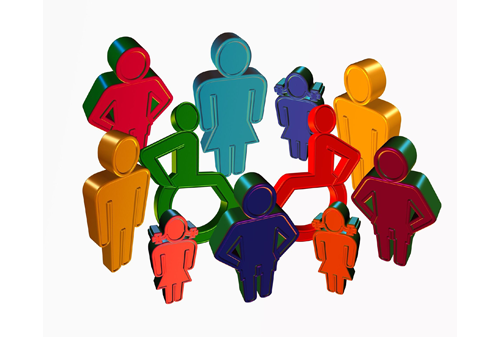
The potential negative impact of societal attitudes towards individuals with a learning disability and/or autism can lead to the rights and opportunities being limited.
Well-meaning carers may believe that individuals can’t do specific things for themselves, and insist on doing things for them, leading to control and limiting the chances of increasing in confidence to do things for themselves.
This could lead to lower self-esteem compared with individuals who are supported to take risks, try new things or access education and employment, and therefore become more independent and self-reliant.
Gall agweddau cymdeithas a all gael effaith negyddol tuag at unigolion ag anabledd dysgu a/neu awtistiaeth arwain at sefyllfa lle y caiff hawliau a chyfleoedd eu cyfyngu.
Mae'n bosibl y bydd gofalwyr da eu bwriad o'r farn na all unigolion wneud pethau penodol drostynt eu hunain, ac y byddant yn mynnu gwneud pethau drostynt, gan felly reoli a chyfyngu ar eu cyfleoedd i fagu hyder yn gwneud pethau drostynt eu hunain.
Gallai hyn arwain at hunan-barch is o gymharu ag unigolion sy’n cael eu cefnogi i gymryd risgiau, rhoi cynnig ar bethau newydd neu fanteisio ar gyfleoedd addysg a chyflogaeth, ac felly ddod yn fwy annibynnol a hunan-ddibynnol.
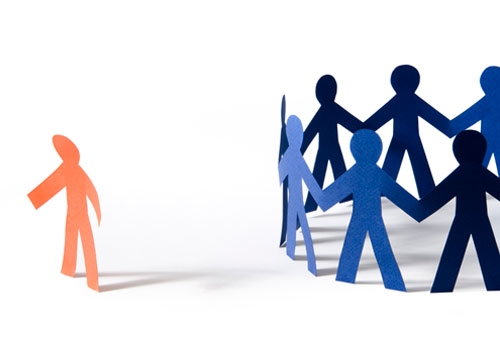
Many years ago people with a learning disability/autism were generally locked away in institutions which weren’t regulated.
Due to government legislation there have been huge changes in how individuals with a learning disability or autism are supported.
The Equality Act has put in place legislation to protect those with a disability and other protected characteristics. Societal attitudes have evolved over the years and the social model is contributing to a changing view of disability and a focus on overcoming barriers. That said, there is still work to be done to create an equal society.
The Equality Act also ensures that these individuals are treated fairly and have equal access to services, opportunities and employment. In addition to this, a number of charities and organisations have been set up to ensure that these rights are supported.
Guidance on the protection of vulnerable adults is provided through the safeguarding procedures which can be found here: https://bit.ly/2ABPnPV
Many now have the opportunity to live independent lives in supported housing providing 24 hour care. These supported houses are regulated and inspected to ensure that policies/regulations and legislation are enforced and the individual is protected and treated fairly.
Where relationships were discouraged in the past, now with support to ensure that they understand/consent to the relationship and are protected, they have the right to make their own decisions about the relationships they wish to form.
Flynyddoedd yn ôl, roedd pobl ag anabledd dysgu/awtistiaeth yn gyffredinol yn cael eu rhoi dan glo mewn sefydliadau nad oeddent wedi'u rheoleiddio.
Yn sgil deddfwriaeth gan y llywodraeth, bu newidiadau sylweddol yn y ffordd y caiff unigolion ag anableddau dysgu neu awtistiaeth eu cefnogi.
Mae’r Ddeddf Cydraddoldeb wedi rhoi deddfwriaeth ar waith i amddiffyn y sawl sydd ag anabledd a nodweddion gwarchodedig eraill. Mae agweddau cymdeithasol wedi esblygu dros y blynyddoedd ac mae’r model cymdeithasol yn cyfrannu at farn newidiol am anabledd a ffocws ar oresgyn rhwystrau. Wedi dweud hynny, mae gwaith i’w wneud o hyd i greu cymdeithas gyfartal.
Mae'r Ddeddf Cydraddoldeb hefyd yn sicrhau y caiff yr unigolion hyn eu trin yn deg a bod yr un gwasanaethau, cyfleoedd a swyddi ar gael iddynt. Yn ogystal â hyn, sefydlwyd nifer o elusennau a sefydliadau i sicrhau y caiff yr hawliau hyn eu cefnogi.
Darperir arweiniad ar amddiffyn oedolion agored i niwed trwy’r gweithdrefnau diogelu sydd i’w gweld yma: https://bit.ly/2z1FDhp
Rhoddir cyfle bellach i lawer fyw bywydau annibynnol mewn tai â chymorth sy'n darparu gofal 24 awr. Caiff y tai hyn â chymorth eu rheoleiddio a'u harolygu er mwyn sicrhau bod polisïau/rheoliadau a deddfwriaeth yn cael eu gorfodi a bod yr unigolyn yn cael ei amddiffyn a'i drin yn deg.
Lle nad anogwyd cydberthnasau yn y gorffennol, nawr gan ddarparu cymorth er mwyn sicrhau eu bod yn deall/cydsynio i'r gydberthynas ac y cânt eu diogelu, mae ganddynt yr hawl i wneud eu penderfyniadau eu hunain am y gydberthynas yr hoffent ei meithrin.
There are both positive and negative impacts of having a label of learning disability or autism.
Being labelled can lead to being made fun of and bullying which could be detrimental to the individual’s future confidence. They could suffer from low self-esteem, and feel excluded from specific activities/services, leading them to feel isolated.
People might have a lower expectation of an individual with learning disabilities due to lack of understanding; therefore, the individual might not have the same opportunities open to them. People may assume they can’t do things for themselves and take away their independence.
However, if it is recognised that someone has a learning disability or autism and the individual’s needs are understood they can be enabled to access appropriate services and support to ensure they can flourish and succeed.
Ceir effeithiau cadarnhaol a negyddol o’r label anabledd dysgu ac awtistiaeth.
Gall cael eich labelu arwain at rywun yn gwneud hwyl am eich pen a bwlio a all gael effaith andwyol ar hyder yr unigolyn yn y dyfodol. Gallai ddioddef hunan-barch isel, a theimlo ei fod yn cael ei eithrio rhag gweithgareddau/gwasanaethau penodol gan arwain at deimlad o unigrwydd.
Gallai fod gan bobl ddisgwyliad is o'r unigolyn oherwydd diffyg dealltwriaeth am yr anabledd, felly mae'n bosibl na chaiff yr unigolyn ei herio'n ddigonol yn academaidd. Gallai bobl dybio na allant wneud pethau drostynt eu hunain ac yn eu hatal rhag bod yn annibynnol.
Fodd bynnag, os bydd yr addysgwr yn deall anghenion y person ifanc, yna bydd cymorth ychwanegol yn helpu'r unigolyn i ffynnu ac i lwyddo.
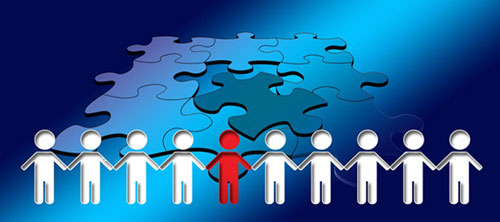
It is not always possible to know that someone has autism as their outward appearance can look the same as everyone else’s. Because of this, their condition may go undiagnosed for many years and the vital support they need at the right time is missed.
Children with undiagnosed autism can be made to feel like the outsider at school because they behave differently to their peers and this can lead to name calling, teasing and bullying. Behavioural problems in undiagnosed autistic children can cause them to be excluded from school which will have a detrimental impact on their life chances.
Adults with autism can struggle in social situations if those around them are not aware that they have the condition. Common traits of autism, such as lack of emotion and inability to understand non-verbal communication, can cause them to act inappropriately and cause offence. This can lead them to being ostracised or worse still, be subject to violence.
Nid yw bob amser yn bosibl gwybod bod unigolyn yn awtistig, am y gall ymddangos yn allanol fel pawb arall. O ganlyniad, mae'n bosibl na chaiff y cyflwr ei ddiagnosio am flynyddoedd ac na ddarperir y cymorth hanfodol sydd ei angen ar yr adeg gywir.
Gall plant ag awtistiaeth nad ydynt wedi cael diagnosis deimlo fel rhywun o'r tu allan yn yr ysgol am eu bod yn ymddwyn yn wahanol i'w cyfoedion ac y gall hyn arwain at alw enwau, tynnu coes a bwlio. Gall problemau ymddygiadol mewn plant awtistig nad ydynt wedi cael diagnosis achosi iddynt gael eu gwahardd o'r ysgol a gaiff effaith andwyol ar eu cyfleoedd bywyd.
Gall oedolion ag awtistiaeth ei chael hi'n anodd mewn sefyllfaoedd cymdeithasol os na fydd y rheini o'u hamgylch yn ymwybodol o'r cyflwr. Gall nodweddion cyffredin awtistiaeth, megis diffyg emosiwn a methu â deall cyfathrebu di-eiriau, achosi iddynt ymddwyn yn amhriodol ac achosi sarhad. O ganlyniad, mae'n bosibl y cânt eu halltudio neu'n waeth byth, y bydd rhywun yn ymosod arnynt.

The life choices of individuals with a learning disability or autism, ranging from where they live, what jobs they do and who they have relationships with, can be limited.
Where the majority of the population can take for granted being able to choose a home of their own in their chosen community, individuals with learning disabilities struggle more to get decent housing. They are often forced to accept places in residential services where they cannot choose their flatmates or how they get support.
Mencap state that only 8 out of 10 individuals with a mild learning disability are in work and they believe that the main barriers to employment are:
Individuals with a learning disability should be given the same rights and opportunities as everyone else and this should include making friends and finding a partner.
Many individuals with learning disabilities are educated away from home at specialist institutions, so they can feel isolated when they are at home and away from the friends they have at school. They find it difficult to form romantic relationships as they struggle to understand or express emotions and can find it difficult to maintain normal conversation.
The Welsh Government launched the Learning Disability – Improving Lives programme in 2018, and this has three main aims:
Gall dewisiadau bywyd unigolion ag anabledd dysgu neu awtistiaeth, gan amrywio o ble y maent yn byw, pa swyddi y byddant yn eu gwneud a phwy y byddant yn meithrin cydberthnasau â nhw, fod yn gyfyngedig.
Gall y rhan fwyaf o'r boblogaeth ei chymryd yn ganiataol y byddant yn gallu dewis cartref i'w hunain yn y gymuned a ddewisir ganddynt, ond mae unigolion ag anableddau dysgu yn cael mwy o ddrafferth na'r rhan fwyaf o bobl i ddod o hyd i dŷ boddhaol. Cânt yn aml eu gorfodi i dderbyn lleoedd mewn gwasanaethau preswyl lle na allant ddewis pwy fydd yn rhannu eu fflat na sut y byddant yn cael cymorth.
Mae Mencap yn nodi mai dim ond 8 o bob 10 o unigolion â mân anabledd dysgu sy'n gweithio, ac yn eu barn nhw, mae'r prif rwystrau i gyflogaeth fel a ganlyn:
Dylid sicrhau bod gan unigolion ag anabledd dysgu yr un hawliau a chyfleoedd â phawb arall a dylai hyn gynnwys gwneud ffrindiau a dod o hyd i bartner.
Caiff llawer o unigolion ag anableddau dysgu eu haddysgu oddi cartref mewn sefydliadau arbenigol, felly gallant deimlo'n unig pan fyddant gartref ac na fyddant yng nghwmni eu ffrindiau yn yr ysgol. Maent yn ei chael hi'n anodd meithrin cydberthnasau rhamantus gan eu bod yn ei chael hi'n anodd deall neu fynegi emosiynau ac y gallant ei chael hi'n anodd cynnal sgwrs gyffredin.
Lansiodd Llywodraeth Cymru Anabledd Dysgu – Rhaglen Gwella Bywydau yn 2018 ac mae'n cynnwys tri phrif nod:

Individuals with learning disabilities from BAME (Black Asian Minority Ethnic groups) often face double discrimination which can be caused by:
Families of the individual may make choices for the individual that are detrimental to their access to services and support due to fear and mistrust.
Some cultures frown upon individuals with learning disabilities. They believe that the individual did something bad in a previous life and has been cursed with the disability leaving the families to see them as an outcast. Due to this, these individuals would not have the support they need from their families to be able to seek the help they require.
Mae unigolion ag anableddau dysgu o BAME (pobl dduon ac Asiaidd a lleiafrifoedd ethnig) yn aml yn wynebu achosion o wahaniaethu deublyg a all ddeillio o'r canlynol:
Gall teuluoedd yr unigolyn wneud dewisiadau ar ran yr unigolyn hwnnw sy'n ei atal rhag cael gafael ar wasanaethau a chymorth oherwydd ofn a diffyg ymddiriedaeth.
Mae rhai diwylliannau yn trin unigolion ag anableddau dysgu yn israddol. Maent o'r farn bod yr unigolyn wedi gwneud rhywbeth gwael mewn bywyd blaenorol a'i fod wedi'i felltithio â'r anabledd, gan arwain at deuluoedd yn diarddel unigolion o'r fath. Felly, ni fyddai gan yr unigolion hyn gefnogaeth gan eu teuluoedd i allu gofyn am yr help sydd ei angen arnynt.
External agencies have a role in tackling negative attitudes and enabling the individual to access a wide range of opportunities. These rights are written in UN Convention on the Rights of Persons with Disabilities.
They can help change these negative attitudes through:
Mae gan asiantaethau allanol ran i'w chwarae wrth fynd i'r afael ag agweddau negyddol a galluogi'r unigolyn i fanteisio ar amrywiaeth eang o gyfleoedd. Mae'r hawliau hyn wedi'u cynnwys yng Nghonfensiwn y Cenhedloedd Unedig ar Hawliau Pobl ag Anableddau.
Gallant helpu i newid yr agweddau negyddol hyn drwy:

Individuals should be given the opportunity to have choice and control over the activities in which they participate, facilitated through person-centred care and support plans.
Support providers and specialist multi-disciplinary health and social care teams should provide support to individuals and their families that enables them to participate in mainstream services and to access education and training within local schools and colleges.
Support providers should be mindful of the fact that everyone has the right to develop and maintain good relationships. They need to offer effective support to the individual and their families, carers and friends to ensure that the vulnerable individual is kept safe whilst enabling them the opportunity to make choices.
Dylid rhoi'r cyfle i unigolion ddewis a rheoli'r gweithgareddau y maent yn cymryd rhan ynddynt, wedi'u hwyluso drwy gynlluniau gofal a chymorth sy'n canolbwyntio ar y person.
Dylai darparwyr cymorth a thimau iechyd a gofal cymdeithasol aml-ddisgyblaeth arbenigol roi cymorth i unigolion a'u teuluoedd sy'n eu galluogi i gymryd rhan mewn gwasanaethau prif ffrwd ac i fanteisio ar addysg a hyfforddiant mewn ysgolion a cholegau lleol.
Dylai darparwyr cymorth fod yn ystyriol o'r ffaith bod gan bawb yr hawl i ddatblygu a chynnal cydberthnasau da. Mae angen iddynt gynnig cymorth effeithiol i unigolion a'u teuluoedd, gofalwyr a ffrindiau er mwyn sicrhau bod unigolion sy'n agored i niwed yn ddiogel ond eu bod hefyd yn cael cyfleoedd i wneud dewisiadau.

Increased awareness and understanding of learning disabilities will ensure that individuals are able to participate in a society where they feel welcome and get the support and services they need.
The Welsh Government has a part to play in raising awareness and promoting the rights of individuals with learning disabilities through the passing of legislation and the production of policy and guidance documents.
Schools can promote awareness and understanding amongst staff and pupils, encouraging equality for children with learning disabilities and taking action to eliminate bullying and harassment.
All public authorities have a duty under the Disability Discrimination Act (2005) to involve individuals with disabilities in decisions about planning and delivery of services. Their involvement will ensure that the services offered are appropriate to meet their needs.
Employers should be encouraged to recognise the skills that individuals with learning disabilities can bring to their organisation and actively welcome them as prospective employees, ensuring that employment is accessible.
The media can play an important role in influencing public opinion and could help raise awareness of learning disabilities, challenge stereotypes and address misconceptions.
Bydd gwell ymwybyddiaeth a dealltwriaeth o anableddau dysgu yn sicrhau y gall unigolion gymryd rhan mewn cymdeithas lle maent yn teimlo bod croeso iddynt a'u bod yn cael y cymorth a'r gwasanaethau sydd eu hangen arnynt.
Mae gan Lywodraeth Cymru ran i'w chwarae wrth godi ymwybyddiaeth a hybu hawliau unigolion ag anableddau dysgu drwy basio deddfwriaeth a llunio dogfennau polisi a chanllawiau.
Gall ysgolion hybu ymwybyddiaeth a dealltwriaeth ymhlith staff a disgyblion, gan annog cydraddoldeb i blant ag anableddau dysgu a chymryd camau i ddileu achosion o fwlio ac aflonyddu.
Mae dyletswydd ar bob awdurdod cyhoeddus o dan y Ddeddf Gwahaniaethu ar sail Anabledd (2005) i gynnwys unigolion ag anableddau yn y penderfyniadau a wneir ynghylch cynllunio a darparu gwasanaethau. Bydd eu cynnwys yn y broses yn sicrhau bod y gwasanaethau a gynigir yn briodol o ran diwallu eu hanghenion.
Dylid annog cyflogwyr i gydnabod y sgiliau y gall unigolion ag anableddau dysgu eu cyflwyno i'w sefydliad ac i'w croesawu fel darpar gyflogeion, gan sicrhau bod swyddi yn hygyrch.
Gall y cyfryngau chwarae rhan bwysig wrth ddylanwadu ar farn y cyhoedd a gallent helpu i godi ymwybyddiaeth o anableddau dysgu, herio stereoteipiau ac ymdrin â chamsyniadau.
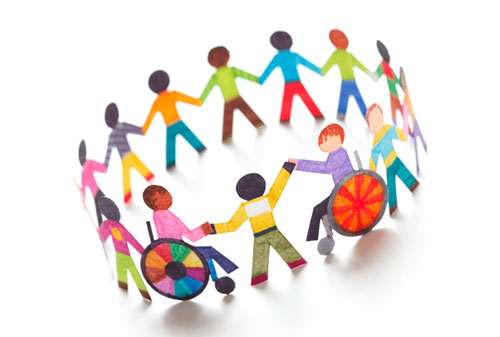
Everyone has a role to play in challenging prejudice and discrimination. Care workers can do this by:
Mae gan bawb ran i'w chwarae wrth herio rhagfarn a gwahaniaethu. Gall gweithwyr gofal wneud hyn drwy: